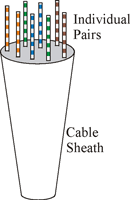
 jacket/insulation.
 -
Residential
-
Vertical Markets
-
Managed Services
-
Pre-Bundled Solutions
-
Solution Spaces
-
Content Distribution
and Control -
Video Conferencing
 CXUnify
Liberty Products
- New Products
- Digital Signage
- Cable: Bulk Cable
- Cable: Pre-Made and Patch
- Connectors and Adapters
- AV over IP Solutions
- Signal Extenders & Baluns
- Switchers
- Distribution Amps / Splitters
- Scalers / Converters
- Fiber Optic Solutions
- Networking and Wi-Fi Solutions
- Collaboration Technology
- Plates, Panels and Inserts
- Sound Reinforcement
- Power Management Solutions
- Control Systems and Accessories
- Racks, Mounts and Accessories
- Enclosures and Boxes
- Safety Products and Supplies
- Tools and Install Accessories
- Bargain Bin
FLX Series Training Video
Remove item from Shopping Cart?
Are you sure you want to remove this item from your cart?
This can not be undone.
Click "Remove from Active Cart" to remove this part from your cart.

X
*Offer ends soon! Exclusively for Pro-AV integrators, requires iPad or Android Tablet.
FREE Teleportivity Software License to all PRO-AV integrators.
You'll get a cloud-software subscription with a live video concierge and QR software license.
What you'll get:
1 x Free Video Concierge / Welcome Point Software License
Provide the best 'face to face' welcome experience for your employees, visitors, and customers.
1 x Free QR Code - Live Information & Video Help Point
Instantly create a QR Code to make any space, place, or object a portal to a world of help.
Use, test and experiment with Teleportivity’s Video Concierge / QR Technology.
Can be used in your own office, remote locations, or in a pilot program with an end user.
What you’ll need:
- llA PC (with camera & microphone) to setup your live information help point.
- An iPad / Android Tablet and stand for your fixed screen concierge or welcome point.
- 10 minutes for setup. Simply load the supplied software license, and you’ll be ready!
*Offer ends soon! Exclusively for Pro-AV integrators, requires iPad or Android Tablet.